
Lawn Grading And Soil Prep That Sets Up The Whole Yard
Reshape uneven or poorly draining ground, then prepare the soil so sod, patios, walls, and fences all sit on a surface that works.
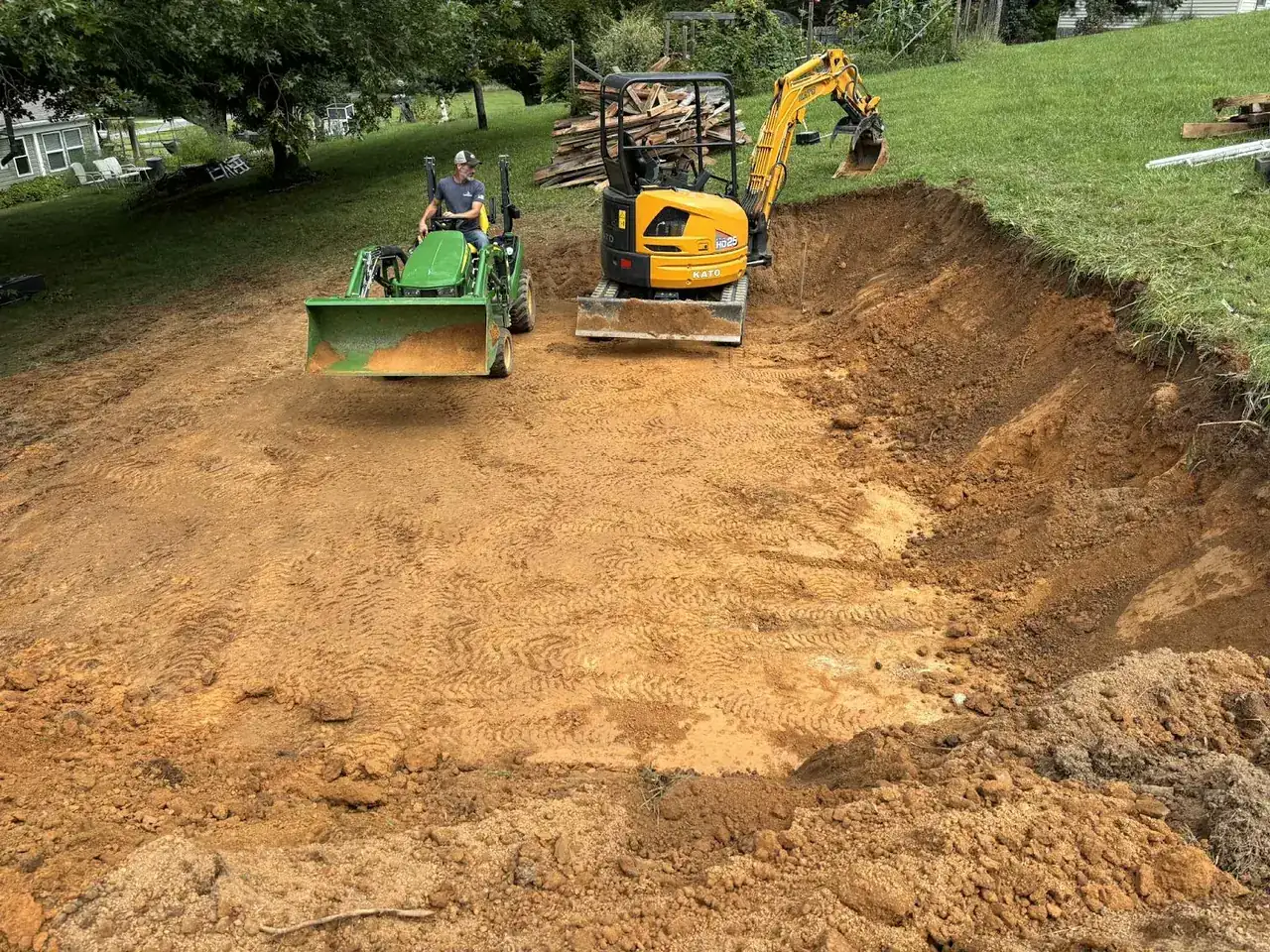
Hero photo: Cultured Roots.
Most Yard Problems Start With Grade
Puddles that never dry, water running toward the foundation, bare strips that wash out, and lawns that are hard to mow usually trace back to grade. Cultured Roots handles site prep and grading as part of our hardscape, building, and lawn work.
Our posted projects often start the same way: clear the site, grade it, then build. The same order applies to lawns. Get the shape and the soil right, then lay sod or plant.
What Grading Can Fix
- Low spots where water stands after rain.
- Ground that slopes toward the house instead of away from it.
- Rough, uneven lawns left after construction, tree removal, or utility work.
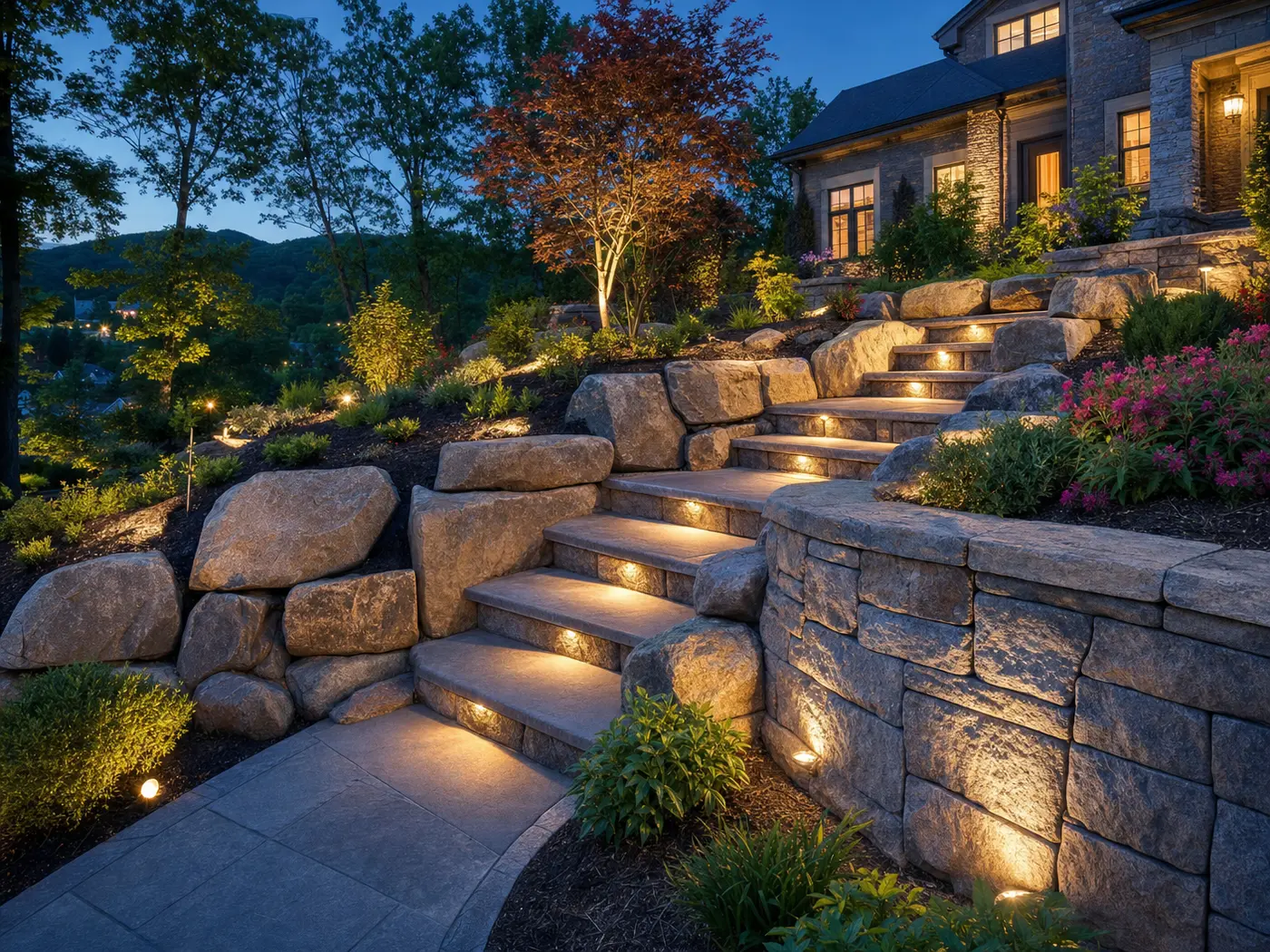
- Steep or eroding areas that may need re-sloping, or a retaining wall.
- Level pads for patios, sheds, shelters, and play areas.
Rough Grade, Finish Grade, And Soil Prep
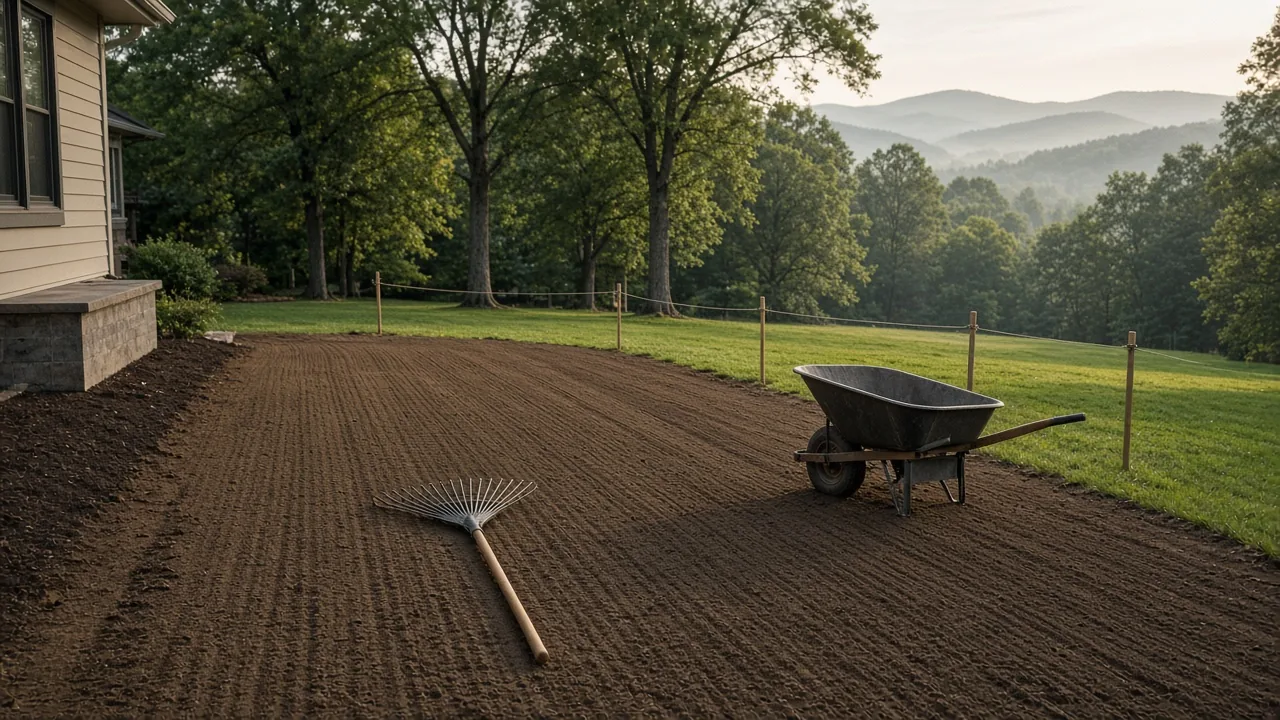
Rough grading moves soil to set the overall shape: where the high and low points are and which way water travels. Finish grading smooths that shape to its final surface so a lawn, patio base, or bed can go on top.
Soil prep makes the top layer ready for roots. That can mean loosening compacted ground, removing rock and debris, and adding topsoil or amendments. A soil test through Virginia Cooperative Extension can show what the soil actually needs.
Grading With Drainage In Mind
Grading is the first line of defense for water. Moving water away from the house and hardscape, and giving it somewhere to go, protects foundations, patios, and walls. Some properties need more than surface grading, such as drainage features or a wall to hold a slope. We will tell you if the site calls for more.
Before any digging, Virginia 811 must be contacted, and private lines such as wells, septic, and irrigation need to be located separately.
Grading Before Sod, Fences, And Hardscape
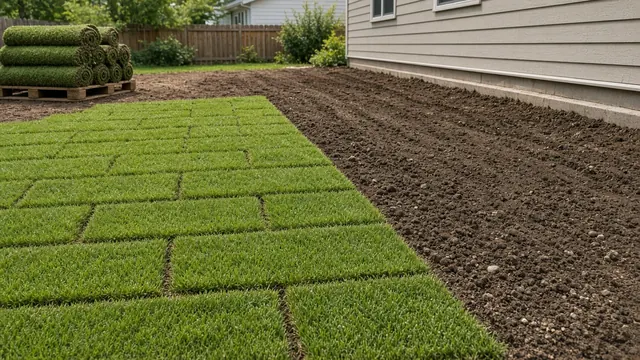
Grade comes before almost everything else. Set it before you lay sod, before you set a fence line, and before patio base goes down. Doing it in that order avoids re-digging finished work. See sod after a hardscape project for the full sequence.
Questions That Shape The Project
Where Water Goes
Watch the yard during and after rain and note where water starts, travels, and stops.
What Is Nearby
Foundations, patios, walls, driveways, trees, and utilities limit how much soil can move.
Access
Equipment needs a path into the yard, and some sites need hand work.
Next Surface
Lawn, patio, beds, or a structure: the finished use sets the target grade.
From First Conversation To A Clear Scope
Share The Site
Send wide photos, ideally during or after rain, and the rough area.
Find The Problem
Identify low spots, slopes toward structures, and erosion.
Plan The Grade
Decide where soil moves, where water goes, and what surface comes next.
Confirm The Scope
Agree on grading, soil prep, restoration, and access before work begins.
Grading & Soil Prep Questions, Answered.
Do you grade yards before laying sod?
Can grading fix water near my foundation?
Can equipment reach my backyard?
Should grading happen before a fence or patio?
Planning A Grading Project?
Share the property location, what you want to change, and any site details or photos that may help.