 Cultured Roots LLC
Roanoke region, Virginia · Project planning
Fence Lines on Sloped Lots: Grade, Water, and Post Layout
Is the ground along the fence line ready for posts, and how will the fence handle the slope and the water?
Published by Cultured Roots LLC ·
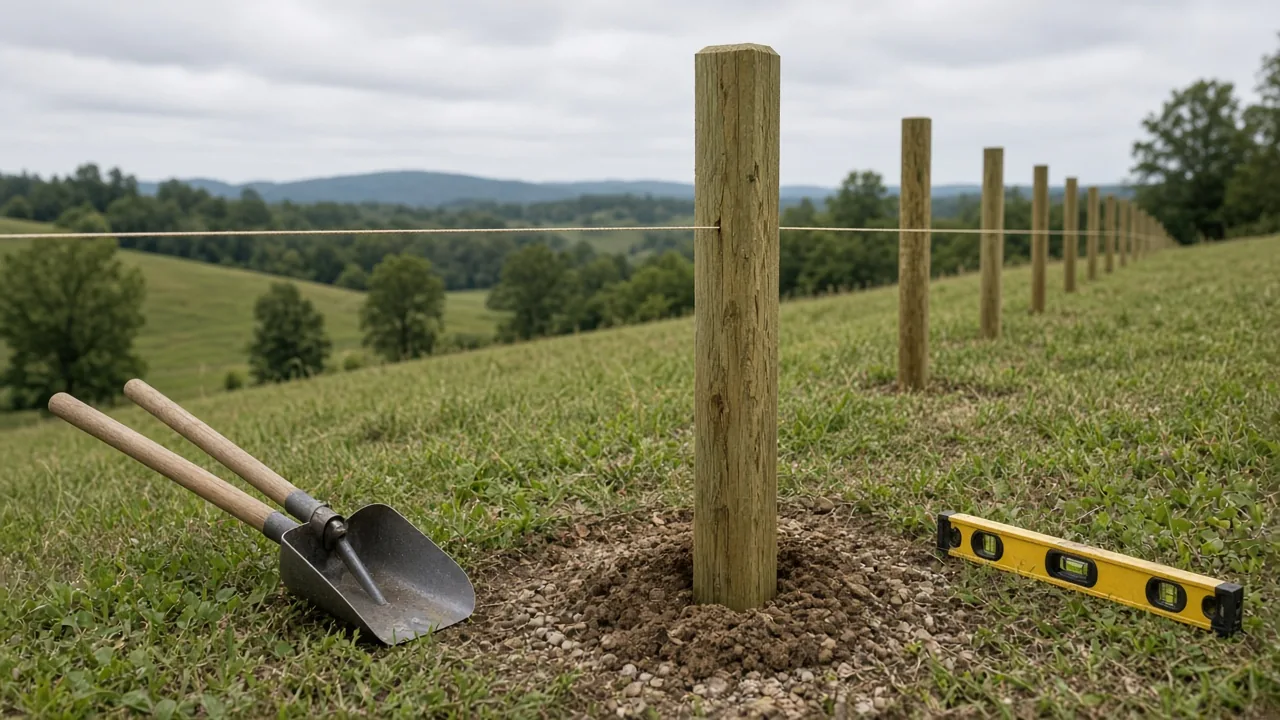
On hilly Roanoke region lots, the ground a fence crosses decides as much as the fence style. A few checks before posts go in prevent leaning posts, gaps, and trapped water.
Related service page: Fence Installation Near Roanoke, VA.
Is the ground along the fence line ready for posts, and how will the fence handle the slope and the water?
Confirm the line first
Find your property markers or survey before anything else. A fence built on a guessed line can become a problem later, especially on long runs through woods or along a road. If the boundary is uncertain, confirm it before posts are set.
Stepped or following the grade
On a slope, a fence can be stepped, with each section level and dropping at each post, or it can follow the grade, with rails or panels angled to match the ground. Rail styles such as split rail follow slopes naturally. Solid privacy panels are usually stepped, which leaves triangular gaps under the low side that should be planned for.
Walk the line and mark the steepest pitches, dips, and humps. A short regrade can sometimes smooth out a line that would otherwise look choppy.
Watch where water goes
Fences often run along the same low lines water uses. A solid fence across a swale can hold water or push it somewhere new. Post holes in wet ground can stay soft. Note where water travels during heavy rain, where downspouts drain, and where the ground stays wet. If the yard needs grading, it is usually best to do it before the fence goes in.
Underground and overhead
Virginia 811 must be contacted before digging fence posts. Private lines such as wells, septic lines, irrigation, yard lighting, and lines to outbuildings are not marked by 811 and must be located separately. Also look up: low limbs and overhead lines can affect the route and future maintenance.
Plan the finish
Think about how the fence meets the lawn. Leave room to mow along it, or plan a mulch or gravel strip. If the lawn will be restored after the work, plan sod for after the posts are in.
A practical planning example
For example, a split rail line along a sloped, wooded edge can follow the hillside with little earthwork, while a solid privacy fence on the same slope would need stepped panels and a plan for the gaps underneath.
This is an illustrative scenario, not a completed-project case study or a diagnosis of your property.
What to gather before a site conversation
- Wide photos of the entire fence route, from both ends.
- Survey, plat, or the location of known property markers.
- Notes on wet areas, downspouts, and where water runs in heavy rain.
- Gate locations and the equipment or vehicles that need to pass.
Your next step
Contact Cultured Roots with your photos and notes. See our fencing services, including split rail and privacy fencing.
Use the printable project worksheet to organize the conversation.
Common questions
Should a fence on a slope be stepped or follow the grade?
Rail fences usually follow the grade. Solid panels are usually stepped. The choice affects appearance and the gaps under each panel.
Do I need to call 811 for fence posts?
Yes. Virginia 811 must be contacted before digging, and private lines must be located separately.
Should grading happen before a fence goes in?
Usually. Setting the final grade first avoids disturbing new posts later and lets the fence line follow the finished surface.
Related local reading
- Fence Installation Near Roanoke, VA | Cultured Roots
- Split Rail Fence Installation Near Roanoke, VA | Cultured Roots
- Lawn Grading & Soil Prep for Sod Near Roanoke, VA | Cultured Roots
- Planning a Fence Near the Top of a Retaining Wall
Sources and further checks
Virginia 811 homeowner guidance: Contact Virginia 811 before digging, including its explanation of private lines.
Requirements depend on the actual scope and parcel. Confirm them with the responsible office for your property.
Tell Cultured Roots about your project
Bring your photos, rough dimensions and priorities. Explain what you want to change and where the property is located.
Tell Cultured Roots about your project Call (540) 200-5709