
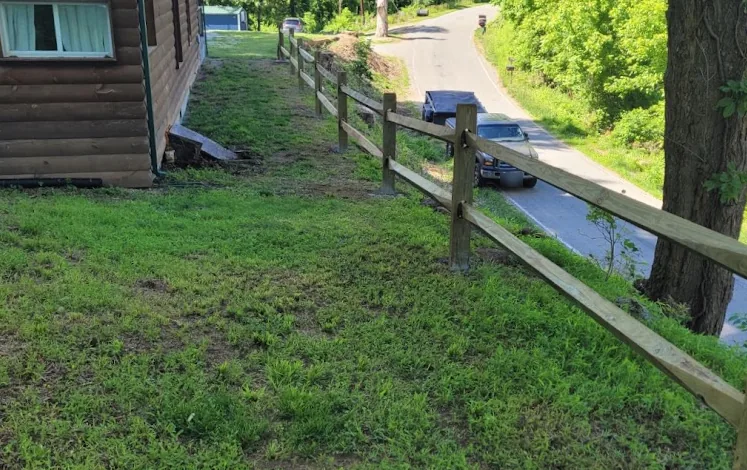
Split Rail Fences That Follow The Land
An open, rustic fence for marking a line, framing a yard, or bringing order to a hillside edge without closing off the view.
Hero photo: Cultured Roots.
Order Without Closing Off The View
Split rail is the fence we reach for when a property needs a clear edge but not a wall. The rails sit in mortised posts, the look is open and natural, and the line can bend and climb with the ground.
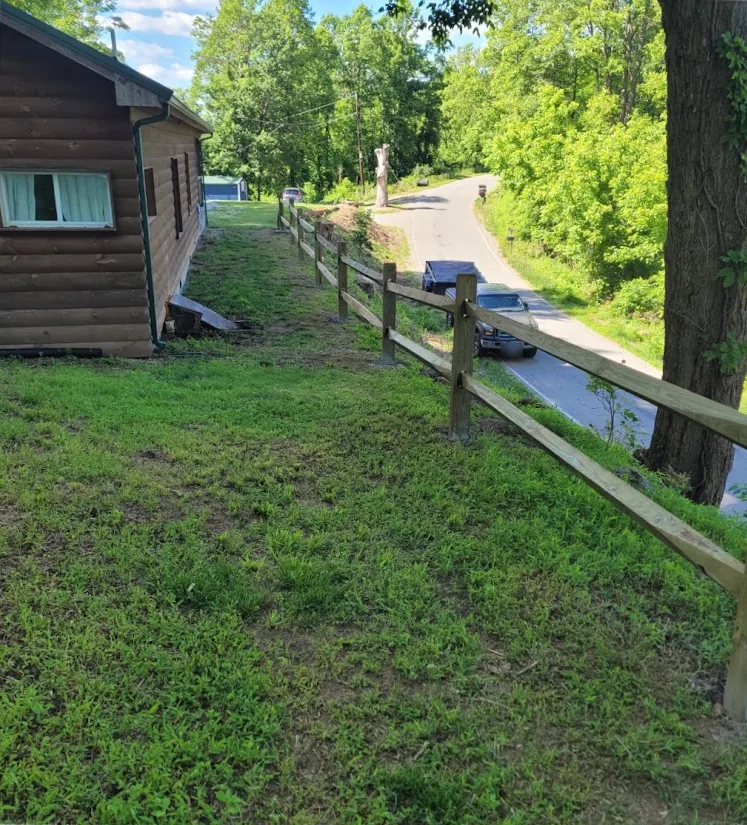
In one recent job along a wooded property in the Roanoke Valley, a split rail fence gave a sloped, unruly edge a sense of order without erasing what made it beautiful. That is the goal on most split rail projects: frame what is already there.
A Recent Split Rail Installation
These photos are from a Cultured Roots split rail fence on a sloped, wooded property in the Roanoke Valley. The line runs along a hillside above the road and beside the house, following the grade instead of fighting it.

Where Split Rail Works Well
Split rail on its own will not keep in small pets or give privacy. If that is the goal, tell us. A privacy fence or a different style may fit better.
- Front-yard and roadside edges where you want definition without blocking the view.
- Long lines along wooded or sloped ground, where rails can follow the land.
- Framing a lawn, garden, driveway entrance, or the edge of a patio area.
- Rural properties that want a traditional look along a lane or field edge.
Laying Out A Split Rail Line On A Slope
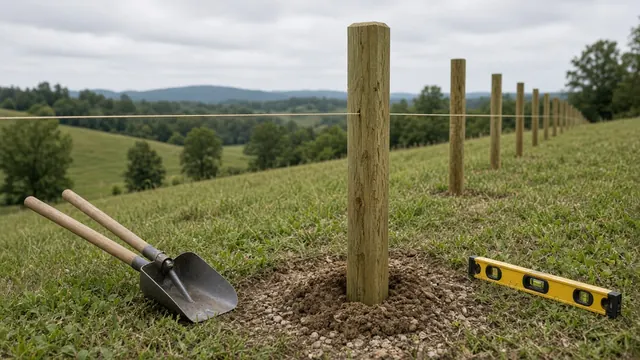
On sloped ground, posts are set so the rails stay even with the grade and the line reads smoothly from the house and the road. Post spacing follows rail length, so curves, corners, and gate openings are planned first and the rest of the line is fit between them.
Before posts go in, the route is checked for rock, roots, low spots, and anything buried. Virginia 811 must be contacted before digging, and private lines such as wells, septic, and yard lighting are located separately. For more on the order of work, see fence lines, grade, and drainage.
Pairing Split Rail With Other Site Work
A split rail line often ties into other work: clearing an overgrown edge, regrading a rough strip, or finishing a bank with a retaining wall or steps. Planning it together keeps the fence, grade, and lawn edge in line.
Questions That Shape The Project
The Purpose
Decide whether the fence frames a view, marks a boundary, or guides traffic before choosing rail count.
The Route
Walk the full line and note curves, corners, gates, trees, and steep pitches.
Ground & Water
Rock, roots, wet ground, and runoff affect post holes and line placement.
Parcel Requirements
Confirm property lines and any locality or HOA limits for the actual parcel.
From First Conversation To A Clear Scope
Share The Route
Send wide photos of the whole line and the approximate length.
Set Priorities
Note gates, corners, the look you want, and anything the fence must avoid.
Check The Ground
Review slope, rock, roots, water, and utilities along the route.
Confirm The Scope
Agree on layout, gates, materials, and cleanup before work starts.
Split Rail Fencing Questions, Answered.
Can split rail fencing go up a hill?
Will a split rail fence keep my dog in?
Do I need my property line marked first?
What should I send for a split rail quote?
Planning A Split Rail Fence?
Share the property location, what you want to change, and any site details or photos that may help.