 Cultured Roots LLC
Roanoke region, Virginia · Project planning
Finishing With Sod After a Patio, Wall, or Grading Project
What has to be finished before sod goes in, and how will the new lawn meet the hardscape?
Published by Cultured Roots LLC ·
A new patio or wall usually leaves disturbed ground around it. Sod can make the yard feel finished quickly, but only if grade, soil, and edges are planned before it goes down.
Related service page: Sod Installation Near Roanoke, VA.
What has to be finished before sod goes in, and how will the new lawn meet the hardscape?
Why the order of work matters
Sod is the last surface to go down. If grading, drainage, fence posts, lighting, or irrigation are added afterward, the new lawn gets torn up. Plan the yard so the messy work happens first and the lawn closes it out.
A typical order is: hardscape and walls, then final grading and any drainage work, then fence posts or other in-ground items, then soil prep, then sod.
Fixing what construction leaves behind
Equipment paths compact soil. Backfilled trenches settle. Leftover gravel and base material end up in the topsoil. Before sod, the ground should be loosened where it was compacted, cleaned of rock and debris, and brought up with topsoil where needed. See grading and soil prep.
Getting the edge right
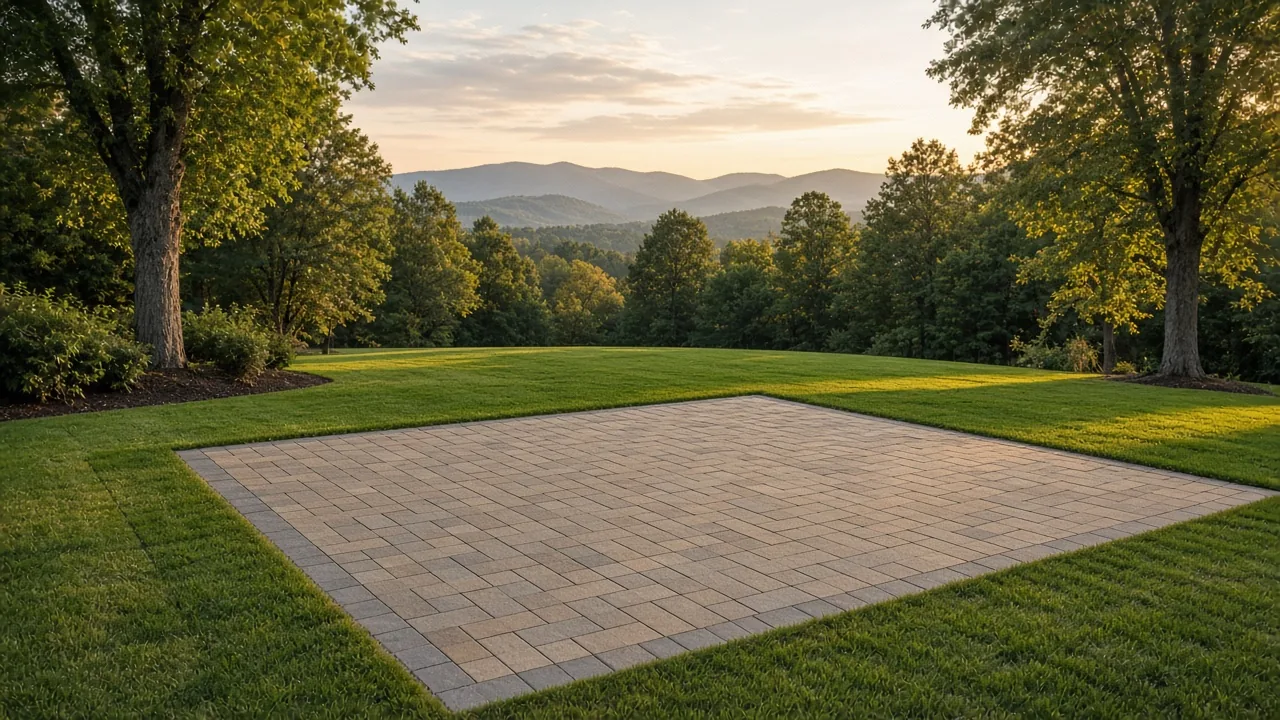
Where sod meets a patio or walkway, the finished soil should sit so the sod's surface ends up close to the paver surface and water sheds off the patio and into the lawn, not back toward the house. Along a retaining wall, keep sod and soil from blocking the wall's drainage, and leave the top of the wall easy to maintain.
Plan beds and mulch strips at the same time. A planting strip along a wall or fence is often easier to keep neat than sod that runs right up to it.
Watering and early use
New sod needs frequent watering at first, then less as it roots. Virginia Cooperative Extension notes that newly sodded or seeded lawns need more frequent watering for the first three to four weeks. Keep heavy traffic, furniture, and equipment off until the sod has rooted, and make sure there is a hose or irrigation that reaches the whole area.
A practical planning example
For example, after a backyard patio is built, the strip between the patio and the old lawn is often bare, compacted, and slightly low. Finish grading that strip so it drains away from the patio, loosening and topping the soil, and then laying sod gives a clean edge in one visit.
This is an illustrative scenario, not a completed-project case study or a diagnosis of your property.
What to gather before a site conversation
- Photos of the finished or planned hardscape and the surrounding bare areas.
- The rough square footage of lawn to restore.
- Any water problems you have seen since the project started.
- Where your outdoor water source is, and whether irrigation is planned.
Your next step
Contact Cultured Roots with your photos and the work that is finished or planned. We build patios and walls and install sod, so the lawn can be part of the same plan.
Use the printable project worksheet to organize the conversation.
Common questions
Should sod go in before or after a patio?
After. Build the patio and walls, finish grading and any in-ground work, then prepare the soil and lay sod.
Can sod be laid on construction fill?
Not well. Compacted fill, gravel, and debris should be loosened, cleaned up, and topped with suitable soil first.
How should sod meet a paver patio?
Set the finished soil so the sod surface sits close to the paver surface and water drains away from the patio into the lawn.
Related local reading
- Sod Installation Near Roanoke, VA | Cultured Roots
- Lawn Grading & Soil Prep for Sod Near Roanoke, VA | Cultured Roots
- Patio Installation Near Roanoke, VA | Cultured Roots
- Planning a Patio Project in the Roanoke Region
Sources and further checks
Virginia Cooperative Extension: Sod Source Selection, Installation, Maintenance, and Producers in Virginia: Background on choosing and installing sod in Virginia.
Virginia Cooperative Extension: Watering the Lawn: Includes guidance on watering newly sodded lawns.
Virginia Cooperative Extension: Soil Testing for the Lawn and Landscape: How to test soil before amending it.
Requirements depend on the actual scope and parcel. Confirm them with the responsible office for your property.
Tell Cultured Roots about your project
Bring your photos, rough dimensions and priorities. Explain what you want to change and where the property is located.
Tell Cultured Roots about your project Call (540) 200-5709